Here in Sarasota, we get to enjoy sunshine nearly year-round, but our floors pay a price for that tropical climate. Florida humidity is one of the biggest challenges hardwood floors face, and it’s something every homeowner should understand before, during, and long after installation. Wood is a natural material, and it never really stops responding to the moisture in the air around it. The good news is that with the right knowledge and a few simple habits, you can keep your hardwood floors looking beautiful for decades, even in our coastal climate.
Why Wood Reacts to Humidity
Hardwood is hygroscopic, which means it naturally absorbs and releases moisture from the surrounding air. When humidity is high, wood draws in moisture and expands. When the air dries out, it releases that moisture and contracts. This constant give-and-take is completely normal, but in a place like Sarasota where humidity can stay high for months at a time, those movements become more pronounced. Understanding this is the key to protecting your investment.
Common Problems Florida Humidity Can Cause
When moisture levels swing too far or stay too high, you may start to notice some telltale signs in your floors:
- Cupping. The edges of each board rise higher than the center, creating a subtle wavy look. This usually means the underside of the wood is absorbing more moisture than the top.
- Crowning. The opposite of cupping, where the center of the board sits higher than the edges. This can happen after a floor has been over-dried or sanded too soon after cupping.
- Gapping. When the air gets drier, boards contract and small gaps open between them. In Florida this is most common when air conditioning runs hard during the warmer months.
- Buckling. In extreme cases, usually involving a water event or persistent moisture, boards can lift away from the subfloor entirely.
None of these mean your floor is ruined, but they are signs that humidity is affecting your wood and worth addressing.
The Sweet Spot: Controlling Indoor Humidity
The single most effective thing you can do to protect hardwood floors in Florida is to keep your indoor environment stable. Wood floors are happiest when indoor relative humidity stays in a moderate, consistent range and the temperature holds steady. Wild swings are far more damaging than a slightly high or low reading.
Running your air conditioning consistently does more than keep you comfortable; it pulls moisture out of the air and helps stabilize your floors. During especially humid stretches, a dehumidifier can help maintain balance. And if you travel during the summer, resist the urge to shut the AC off completely while you’re away. Letting the house sit closed up and humid for weeks is one of the most common causes of floor damage we see in this area.
Smart Habits That Make a Difference
Beyond climate control, a handful of everyday practices go a long way toward protecting your hardwood:
- Wipe up spills and tracked-in rain promptly rather than letting water sit on the surface.
- Place mats at entry doors, especially those leading in from the pool or patio, to catch water before it reaches the wood.
- Clean with a slightly damp mop and a cleaner made for hardwood, never a soaking-wet mop or a steam cleaner.
- Keep an eye on your floors after big rains or storms and address any moisture intrusion quickly.
The Role of Proper Installation and Finishing
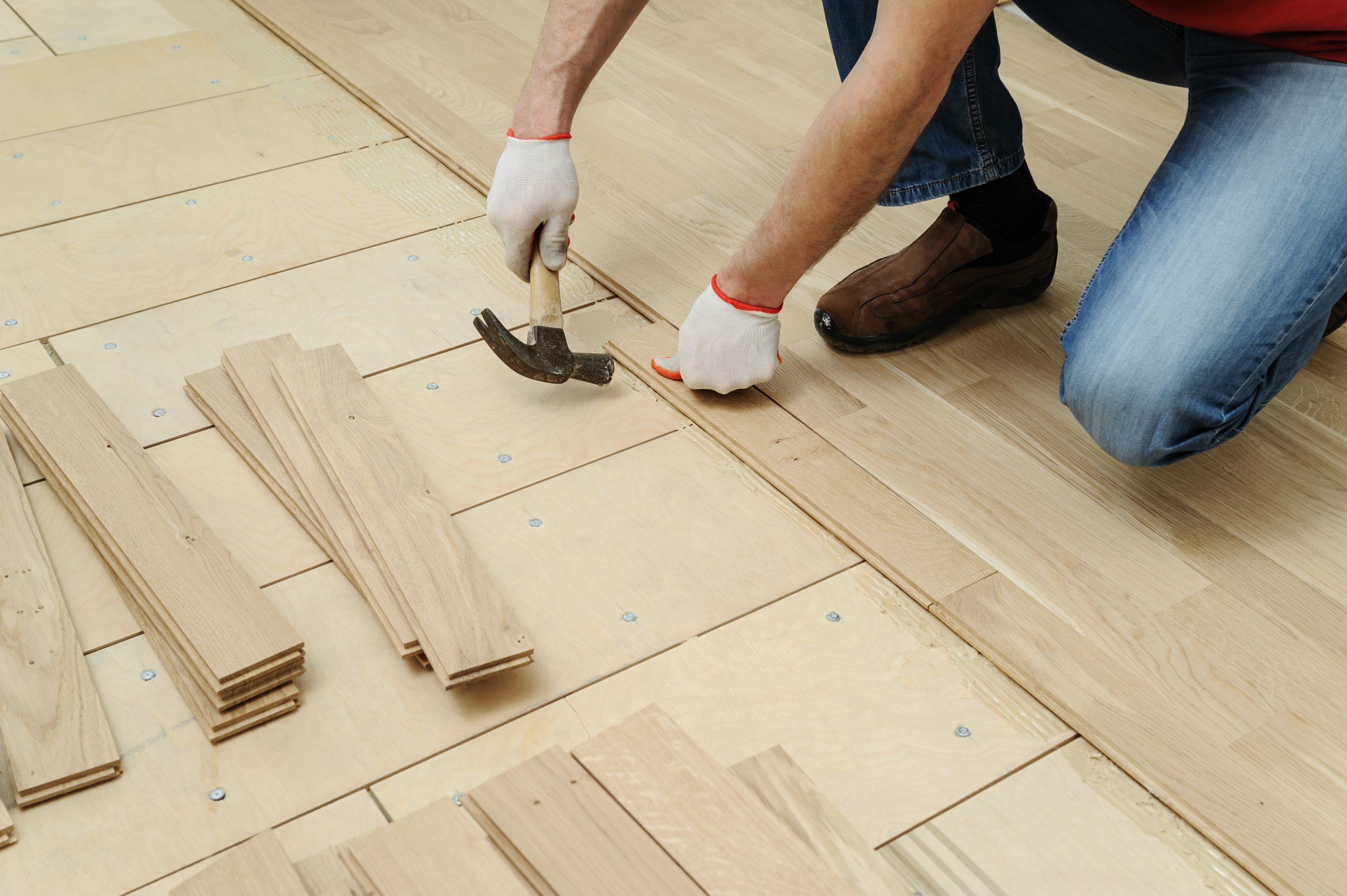
A lot of humidity-related trouble can be prevented before a floor is ever installed. Quality installation in Florida means letting the wood acclimate to the home’s environment before it goes down, leaving the right expansion gaps around the room’s perimeter, and properly preparing and testing the subfloor for moisture. These details give the wood room to move naturally with the seasons without damage.
The finish on your floor matters too. A well-applied protective finish acts as a barrier that slows how quickly the wood absorbs and releases moisture from the air. Over time, finishes wear down, which is one more reason periodic refinishing helps keep your floors protected as well as good-looking.
Engineered Wood and Our Climate
For homeowners who are especially concerned about humidity, engineered hardwood is worth a conversation. Its layered construction makes it more dimensionally stable than solid wood, so it tends to handle moisture swings with less movement. Solid hardwood remains a wonderful, long-lasting choice in our area too, particularly when it’s installed and maintained with our climate in mind.
Protect Your Floors for the Long Haul
Florida’s humidity doesn’t have to be the enemy of beautiful hardwood. With stable indoor conditions, good cleaning habits, and proper installation and finishing, your floors can thrive in Sarasota’s climate for many years. If you’re considering new hardwood, noticing signs of moisture movement in your existing floors, or simply want expert advice tailored to our coastal conditions, our team is always glad to help you keep your floors looking their best.