Choosing a hardwood floor starts with one decision that shapes everything else: solid or engineered. Both are genuine wood and both can look identical once installed, but they are built differently and perform differently depending on where they go in your home. Understanding the difference before you buy saves money and prevents the kind of problems that only show up a year or two later.
What sets them apart
Solid hardwood is exactly what it sounds like — each board is milled from a single piece of wood, typically 3/4 inch thick. Because it is solid all the way through, it can be sanded and refinished many times over its life, which is why solid floors routinely last for decades. Engineered hardwood is built in layers: a real hardwood veneer on top bonded to a plywood or high-density core underneath. That layered construction makes it far more dimensionally stable, so it expands and contracts less when humidity changes.
Where each one works best
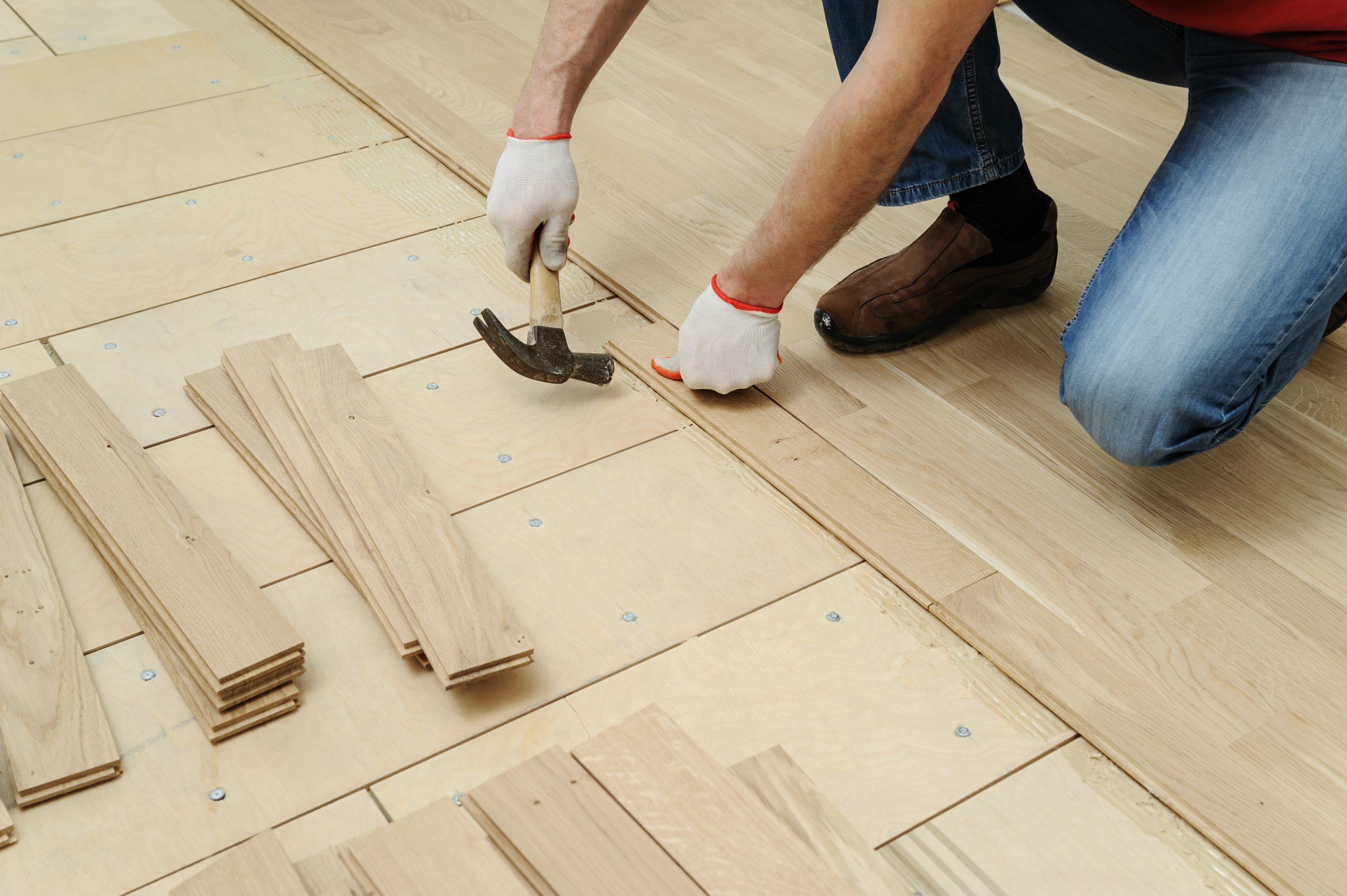
Solid hardwood performs best in living spaces, bedrooms, hallways, and dining rooms installed over a wood subfloor at or above ground level. It is the better long-term choice if you want a floor you can refinish repeatedly and keep for the life of the house. Engineered hardwood is the smarter pick for basements, slab-on-grade floors, and rooms over concrete, or in climates with big seasonal humidity swings, because it resists cupping and gapping. Many engineered floors can also be glued directly to concrete, which solid wood cannot.
Things to weigh before you decide
- Refinishing life: solid can be sanded many times; engineered depends on veneer thickness, so ask how thick the wear layer is.
- Subfloor and moisture: concrete or below-grade rooms usually point to engineered.
- Budget and longevity: solid often costs more up front but can outlast several engineered floors.
- Look: both come in the same species and finishes, so appearance rarely decides it.
The right answer is the one matched to your specific subfloor, room, and goals — not a blanket rule. At Eddie Wood Floors we walk through your space, check the subfloor and moisture conditions, and recommend the product that will hold up where it is going. If you are planning a new hardwood floor, reach out for a consultation and we will help you choose with confidence.